Booking choice: The Modena food tour, from $75 per person. Check dates Tour details
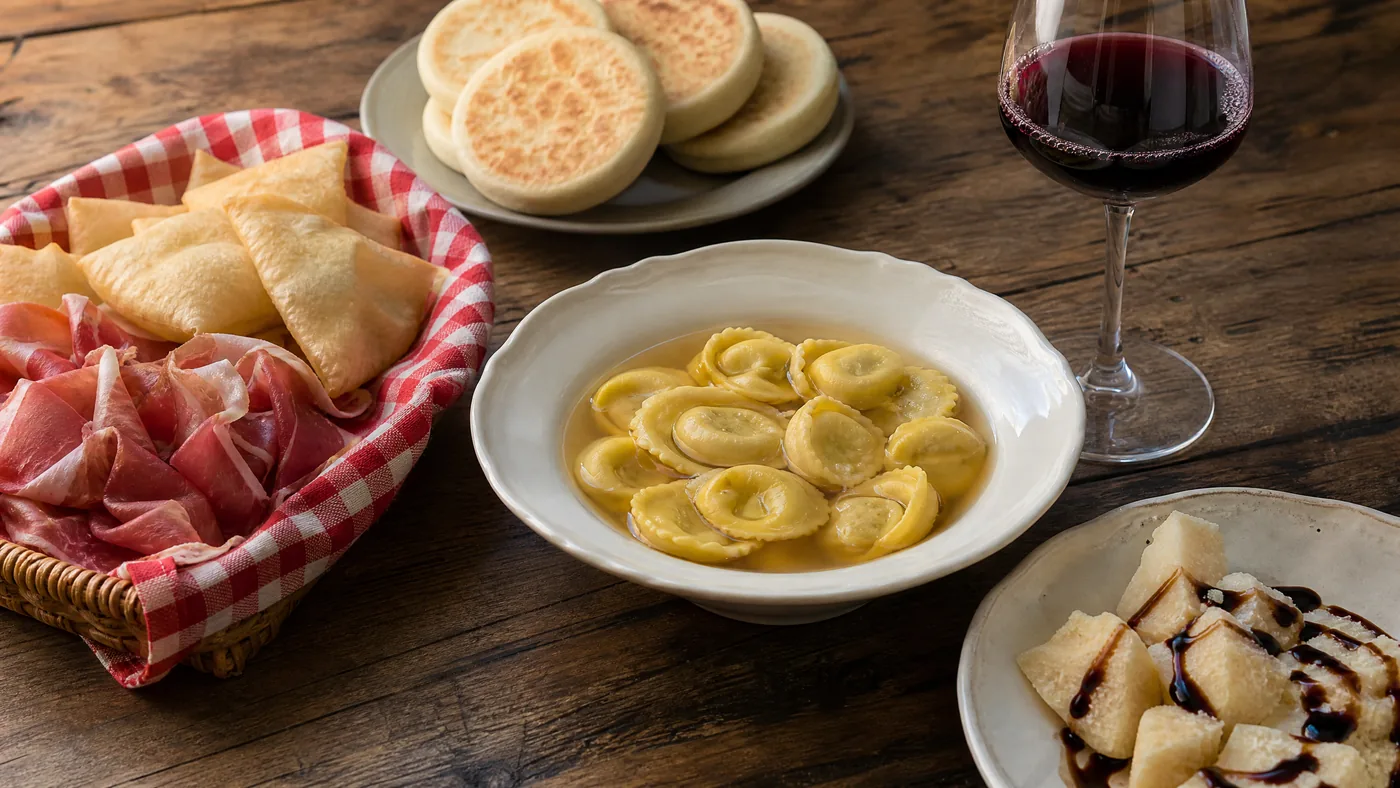
Visit Modena, the city's tourism office, lists the local table in the order you would eat it. Prosciutto di Modena opens the meal, tortellini are the top first course, then come cotechino and zampone, and tigelle and gnocco fritto turn up with cheese and cured meats. Then there is Parmigiano Reggiano in thin slices, finished with a few drops of traditional balsamic.
This guide covers the dishes to try, how people in Modena use both kinds of balsamic, the olive oil question, where locals shop and eat, Lambrusco, and the sweets. Every dish here can be found in the old town, and most of them on a two-hour walk.
The quick answer
Order tortellini, tortelloni with butter and sage, gnocco fritto or tigelle with cured meats, and Parmigiano Reggiano with a drop of traditional balsamic. Drink Lambrusco. In late autumn and winter, add zampone or cotechino. Shop and snack at Mercato Albinelli in the morning, and eat at a trattoria in the old town.
What food to try in Modena?
Eight things cover the city: tortellini, tortelloni, gnocco fritto, tigelle, zampone or cotechino, Prosciutto di Modena, Parmigiano with balsamic and torta Barozzi.
This is the short list, built from Visit Modena's own list of local recipes and the menus of the old-town trattorias that Gambero Rosso recommends. Order one thing from each line and you have eaten Modena.
| Dish | What it is | When to order it |
|---|---|---|
| Tortellini | Small rings of egg pasta filled with pork, prosciutto and Parmigiano Reggiano | First course, any time of year |
| Tortelloni | Bigger pasta parcels, often filled with ricotta and served with butter and sage | First course, lunch or dinner |
| Gnocco fritto | Puffed squares of fried dough | With cured meats and cheese, as a starter or a whole meal |
| Tigelle (crescentine) | Small round flatbreads from the Modena hills, split open and filled | With lard pesto, cured meats or soft cheese |
| Zampone and cotechino | Seasoned ground pork, in a pig's trotter (zampone) or a casing (cotechino) | Late autumn and winter, with lentils or mashed potatoes |
| Prosciutto di Modena | The local cured ham | Antipasto, or on gnocco fritto |
| Parmigiano Reggiano with balsamic | Slivers of aged cheese with a few drops of traditional balsamic | Aperitivo or the end of the meal |
| Torta Barozzi | A dark chocolate cake from the province | Dessert, with coffee |
Two words to know on the menu. Antipasto is the starter, often a board of cured meats. Primo is the pasta course, and in Modena that usually means fresh egg pasta. If you only have room for one primo, make it tortellini.
What are tortellini and tortelloni, and how are they served?
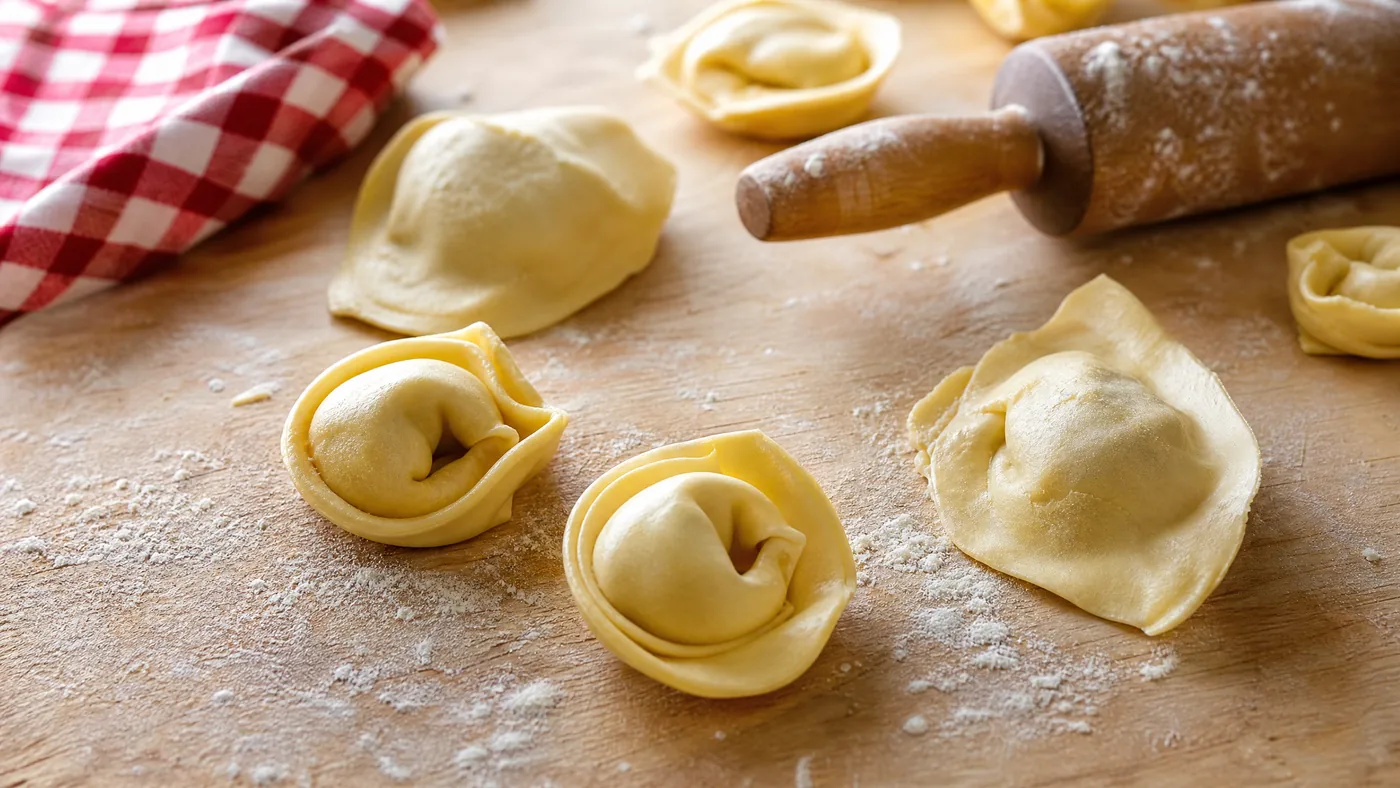
Tortellini are small and filled with meat; tortelloni are larger and usually filled with ricotta. Both are made by hand from egg pasta.
Wikipedia credits Modena with two of Italy's best known filled pastas. Tortellini are squares of egg pasta folded into a small ring around a filling of pork, prosciutto and Parmigiano Reggiano, as Visit Modena describes it, and it calls them the top first course. You will see them on menus in broth (in brodo), the classic way.
Tortelloni are the bigger cousins. The ricotta version with butter and sage is on the menu at Il Fantino and Da Enzo, two trattorias in the old town, and the IGP consortium lists aged tortelloni with butter and sage among its own pairings, finished with a little balsamic. If tortellini are about the filling, tortelloni are about the butter.
Want to watch pasta being made? Look through the windows of the fresh pasta shops around Mercato Albinelli in the morning. The market has its own fresh pasta and tortellini stalls.
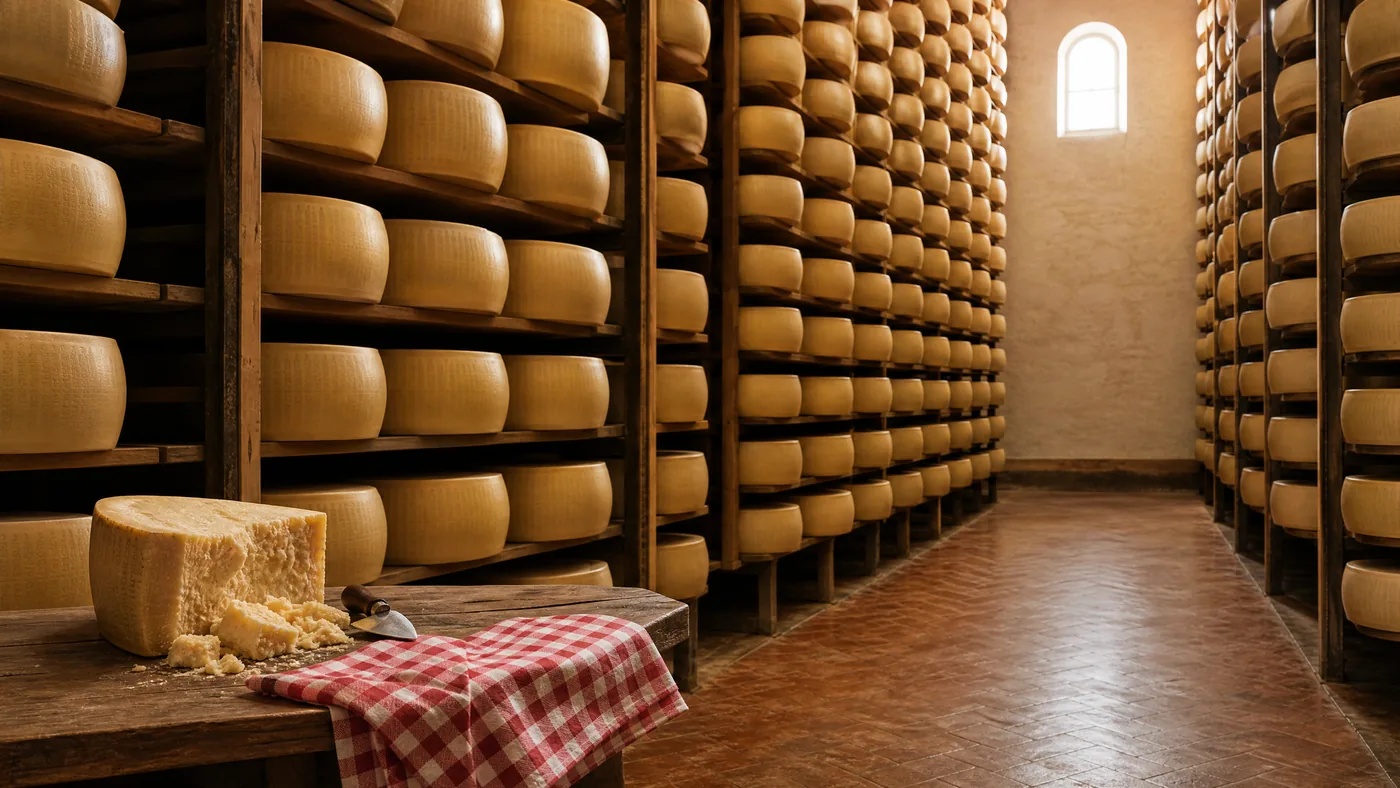
Taste Modena on foot: a balsamic workshop, Parmigiano, local cured meats, a sweet and a glass of red wine in two hours.
Check dates for the Modena food tourWhat are gnocco fritto and tigelle?
Two local breads you eat with cured meats and cheese: gnocco fritto is fried dough, tigelle are small flatbreads cooked between hot discs.
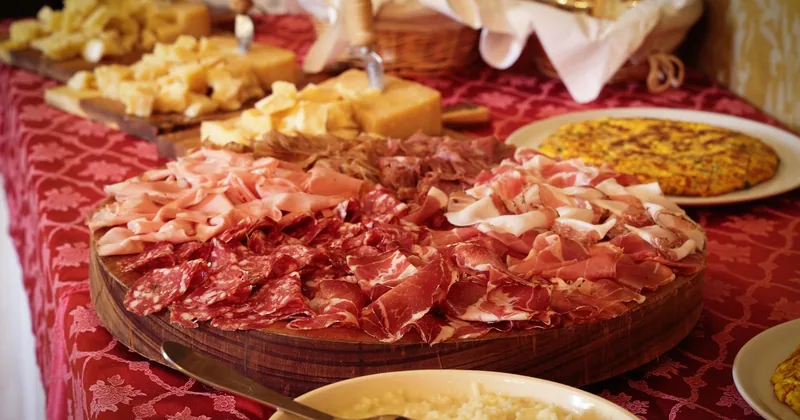
Visit Modena puts both breads in the same line of its recipe list: served as a side or as a main, usually with cheese, cured meats or sauces. A plate of gnocco fritto with a board of salumi is a full meal in Modena, and nobody will think you skipped dinner.
- Gnocco fritto is dough fried until it puffs up hollow. Tear it open while it is hot and lay a slice of ham inside so the fat softens.
- Tigelle, also called crescentine, come from the Apennine hills south of the city. Gambero Rosso describes the crescentina (chersenta in dialect) as a bread from the Modena Apennines. The classic filling is lard pesto with rosemary and grated Parmigiano Reggiano.
Where to try them: Da Enzo on Via Coltellini serves gnocco fritto with cured meats and tigelle, and La Chersenta, a crescentine counter on Via Albinelli by the market, fills them to order. The IGP consortium also pairs tigelle and Parmigiano Reggiano with aged balsamic, which is a good way to try both at once.
How do Italians use balsamic vinegar, and what do they put it on?
A few drops at the very end, never cooked for long. The DOP goes on cheese, meat, fruit and dessert; the IGP goes on salads, vegetables, meat and fish.
The two vinegars of Modena do different jobs, and locals use them differently.
Aceto Balsamico Tradizionale di Modena DOP is used by the drop. Its consortium says a few drops go over select foods such as mature cheese, meat, fish, fresh fruit and dessert, as a finishing touch that lifts the flavor without covering it. The 12-year Affinato suits salads, meat carpaccio, mature cheese and fresh fruit. The 25-year Extravecchio is for risotto, braised red meat, and a piece of extra-mature Parmigiano Reggiano at the end of a meal. To taste it on its own, the consortium suggests room temperature and a ceramic spoon, since metal spoils the flavor.
Aceto Balsamico di Modena IGP is the everyday kitchen bottle. Its consortium's recipes put it on salads, vegetables, roast and grilled meat and fish, usually raw and added after cooking, and reduce it into a glaze for cod. Italia.it gives the one rule that covers both: if you cook with it, add it at the very end so it keeps its flavor.
And the sweet side? Strawberries, gelato and panna cotta with a few drops are all on the consortia's lists. The Reggio Emilia tour on this site includes vanilla ice cream with DOP balsamic.
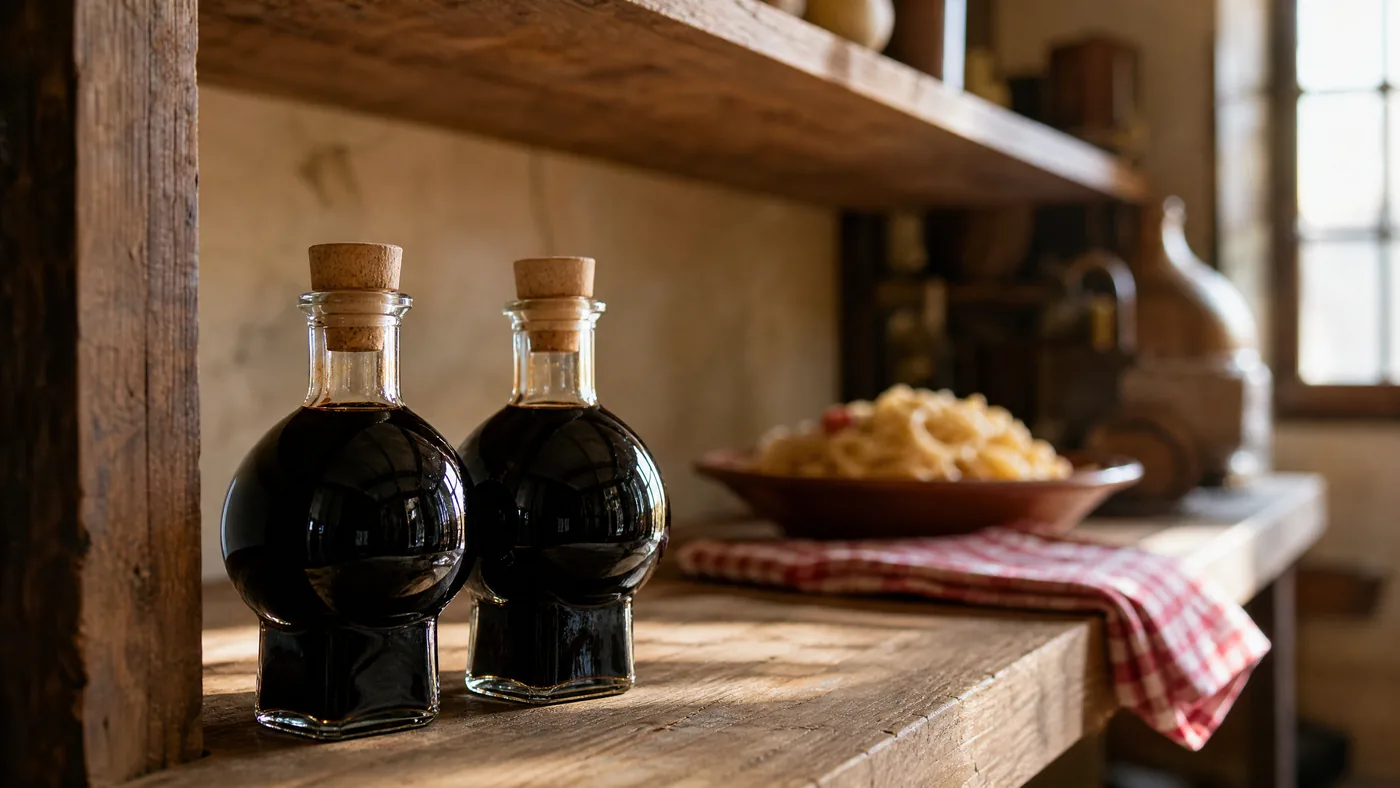
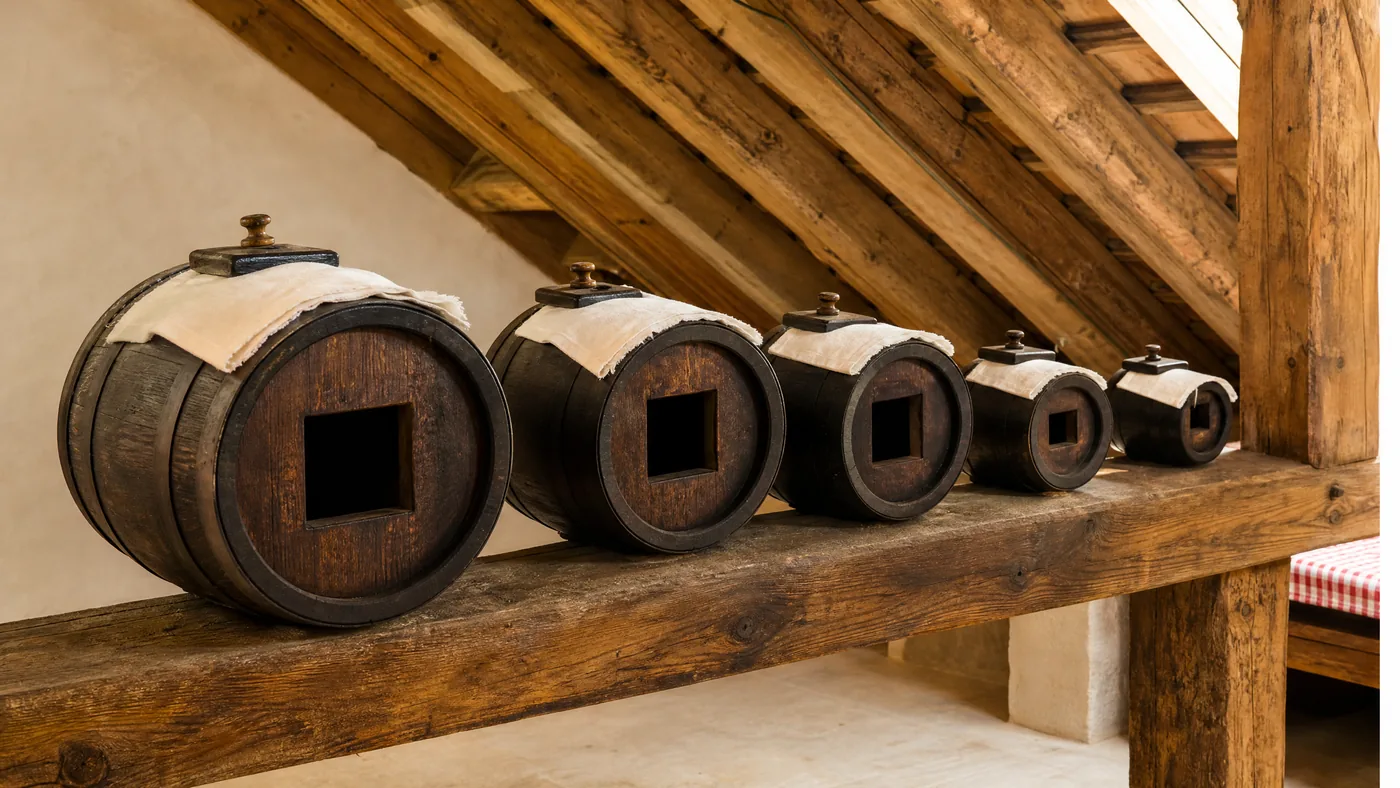
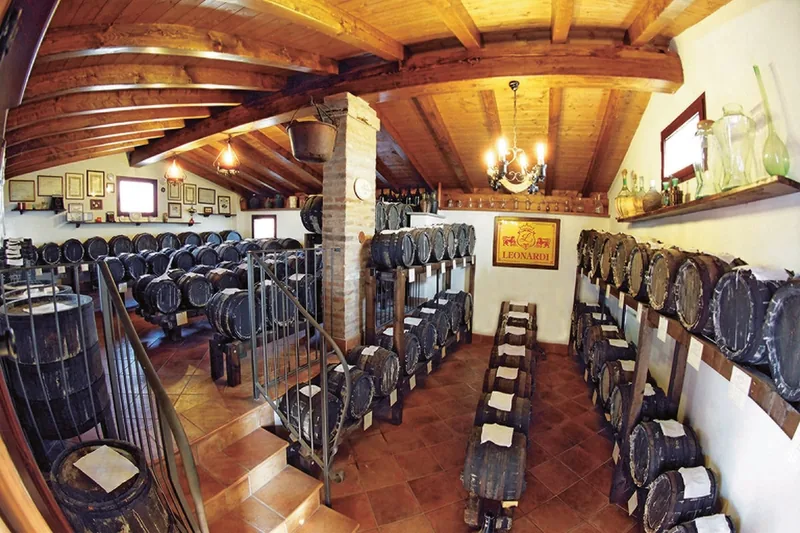
The best way to learn the drops is at the source. On the balsamic lunch at a family acetaia near Modena you taste the DOP aged 12 and 25 years on a teaspoon in the barrel loft, then sit down to a lunch paired with it. It takes 2 hours, from $43 per person.
The family acetaia near Modena: the barrel loft under the roof, the DOP aged 12 and 25 years on a teaspoon, then lunch paired with it.
Explore the balsamic lunch with vinegar cellar tour Tour detailsDo Italians mix olive oil and balsamic vinegar?
Yes, on salads and vegetables, with the everyday IGP. The aged DOP is used on its own, a few drops at a time.
The IGP consortium's own recipe book dresses salads and vegetables with extra virgin olive oil and Aceto Balsamico di Modena IGP together. Asparagus ribbons with oil and IGP on bruschetta, a celeriac, apple and red cabbage salad with oil, salt, pepper and balsamic: that is how the bottle gets used at home.
The DOP is another matter. Its consortium recommends tasting it pure, in small quantities, and using a few drops as a finish. Nobody in Modena stirs a 25-year Extravecchio into a dressing.
What about the saucer of oil and vinegar for dipping bread? You will not find it in either consortium's recipes. In Modena, bread tends to arrive as gnocco fritto or tigelle, with ham.
Where do locals eat in Modena?
At Mercato Albinelli in the morning, and at old-town trattorias such as Trattoria Aldina, Il Fantino and Da Enzo.
Mercato Albinelli is the covered market on Via Luigi Albinelli, open since 1931, with more entrances on Via Mondatora and Piazza XX Settembre. Its own site counts 49 food stalls plus a bar and places to eat: bread, fruit, fresh pasta, cheese, cured meats, fish, and the local products from balsamic to Lambrusco, zampone and Vignola cherries. The Modena food tour notes that it opens only in the morning, Monday to Saturday, so go before lunch.
For a sit-down meal, Gambero Rosso's guide to eating in Modena names these traditional addresses:
| Where | Address | Known for |
|---|---|---|
| Trattoria Aldina | Via Albinelli 40, upstairs, above the market | Tortellini, tagliatelle, lasagne, boiled and roast meats; no lunch bookings |
| Il Fantino | Via Donzi 7 | Gnocco fritto with cured meats, ricotta tortelloni with butter and sage, scaloppine with traditional balsamic |
| Da Enzo | Via Coltellini 17, near the synagogue | Gnocco fritto, tigelle, lasagne, zampone with mashed potatoes, zuppa inglese |
| La Chersenta | Via Albinelli 36/38 | Filled crescentine to eat on the go |
At the other end of the scale is Osteria Francescana on Via Stella, Massimo Bottura's restaurant with three Michelin stars, where Wikivoyage says you need to book months ahead.
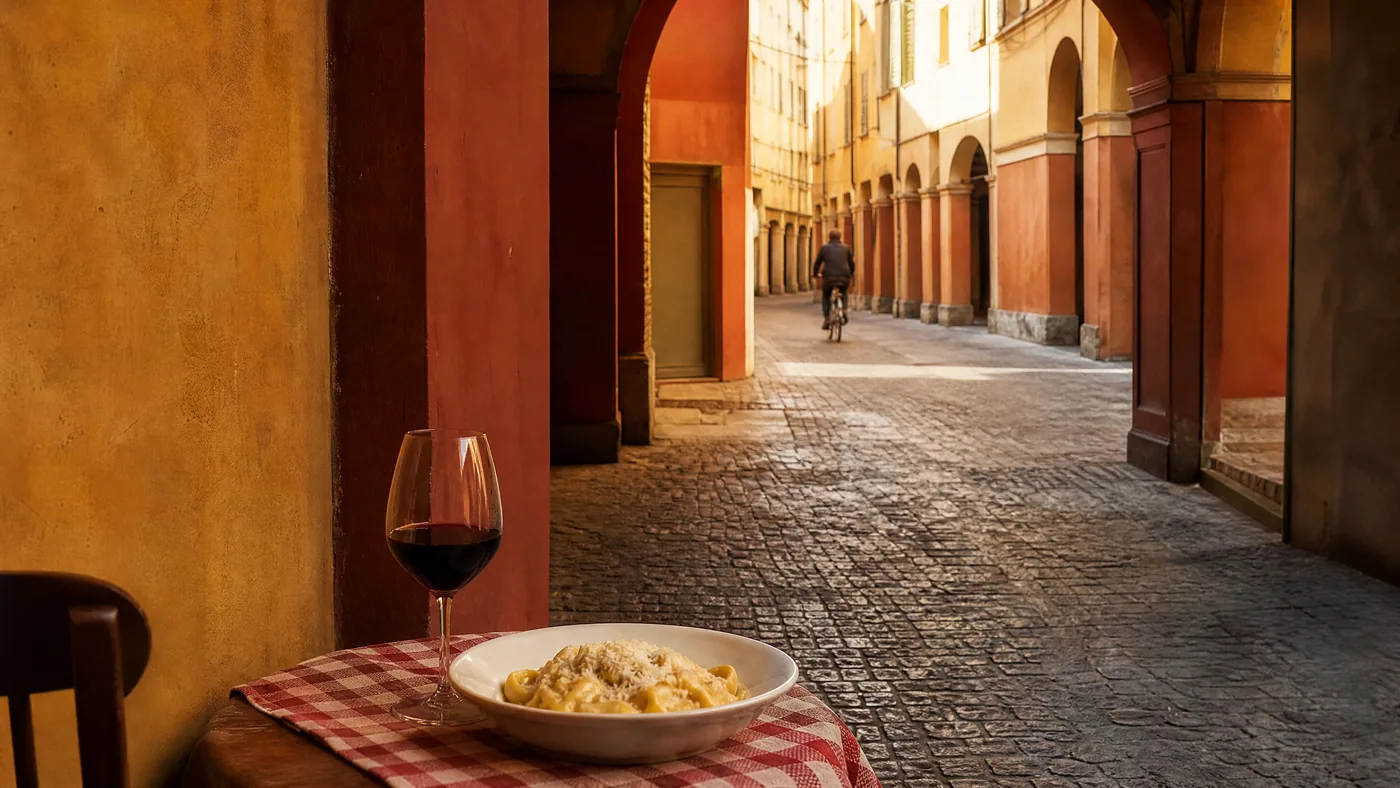
If you want a local to steer you, the Modena food tour starts at Hotel Principe on Corso Vittorio Emanuele II and walks from the Giardini Ducali past Palazzo Ducale, the Duomo and the Ghirlandina, with stops for a balsamic workshop, Parmigiano with local cured meats and breads, the market when it is open, a sweet and a glass of red wine. It takes 2 hours, from $75 per person. A guest on the evening walk wrote:
★★★★★The food tastings were fabulous and way more than expected! We did the 5pm tour and didn't need to eat dinner after. [...]
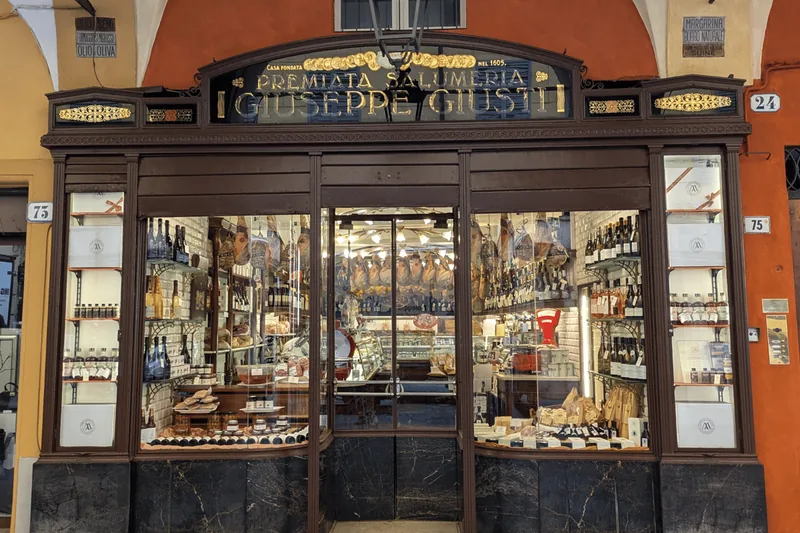
Modena's old town on foot with a local guide: balsamic workshop, Parmigiano, cured meats, a sweet and a glass of red wine.
Explore the Modena food tour Tour detailsWhat wine do you drink in Modena?
Lambrusco, a red wine from local grapes that is usually lightly sparkling and drunk young. It cuts through the pork and the fried bread.
Lambrusco is both a family of grapes and the wine made from them, grown mainly around Modena, Parma, Reggio Emilia and Mantua. Wikipedia notes that the best rated wines are the frizzante (lightly sparkling) reds made to be drunk young, from eight DOC areas. Three of them carry Modena place names on the label:
- Lambrusco di Sorbara, named after a village north of Modena.
- Lambrusco Grasparossa di Castelvetro, from the hills around Castelvetro, south of the city.
- Lambrusco Salamino di Santa Croce, named after Santa Croce, near Carpi.
The sweet Lambrusco that sold abroad years ago is only one style. Wikipedia describes a newer generation of winemakers making drier wines, and those are what a Modena trattoria pours with gnocco fritto. Ask for secco if you want it dry.
On the tours here, the balsamic tour in Magreta ends with Parmigiano and a glass of Lambrusco after the vinegar tasting, and the Reggio Emilia day includes a glass of Lambrusco too. Alcohol tastings on the food walk are for guests aged 18 and over.
Balsamic, Parmigiano and a glass of Lambrusco in 90 minutes, a short drive south of Modena.
Check dates for the balsamic tour with Parmigiano and LambruscoWhich sweets and seasonal dishes should you try?
Torta Barozzi, bensone, zuppa inglese, amaretti and nocino all year; zampone and cotechino from late autumn to New Year.
Visit Modena's list of local sweets is short and good:
- Bensone, a plain cake of flour, milk, eggs, butter and sugar, sometimes filled with jam.
- Zuppa inglese, a trifle of sponge cake, a red herbal liqueur and custard.
- Amaretti, almond cookies.
- Nocino, a walnut liqueur served after the meal.
- Torta Barozzi, the dark chocolate cake. The Modena food tour serves it at the sweet stop, or tortellini fried and filled with cherry jam instead.
Right now, in late November, the seasonal plate is zampone or cotechino. Wikipedia traces cotechino to Mirandola around 1511, when the town was under siege and had to make the most of every cut of pork. The IGP consortium's own pairing is Modena-style cotechino with lentils and a few drops of balsamic. Christmas markets, fog over Piazza Grande and these winter dishes are in our Modena in winter post.
Finish the walk with torta Barozzi or fried tortellini with cherry jam, then a glass of local red wine.
Explore the Modena food tour Tour detailsFrequently asked questions
What is Modena's most famous food?
Tortellini and traditional balsamic vinegar. Modena is also home to zampone and cotechino, gnocco fritto, tigelle, and its share of Parmigiano Reggiano and Lambrusco.
What do Italians put balsamic vinegar on?
The aged DOP goes on mature cheese such as Parmigiano Reggiano, meat, fish, fresh fruit and desserts, a few drops at a time. The everyday IGP goes on salads, vegetables and grilled meat or fish, added at the end.
Do Italians mix olive oil and balsamic vinegar?
For salads and vegetables, yes: the IGP consortium's recipes dress them with olive oil and IGP balsamic together. The aged DOP is used on its own. A saucer of oil and vinegar for dipping bread is not in either consortium's recipes.
When is Mercato Albinelli open?
Mornings, Monday to Saturday, per the Modena food tour listing. The market is on Via Luigi Albinelli in the old town, with entrances from Via Mondatora and Piazza XX Settembre too.
Ready to book
Choose your tour
Free cancellation up to 24 hours before on every option. Prices are from-prices in USD and move with the season.
Modena Food Tour: Sightseeing & Taste
The old town on foot with balsamic, Parmesan, charcuterie and wine
Balsamic Lunch with Vinegar Cellar Tour
- Guided tour of the vinegar cellar
- Traditional Balsamic Vinegar of Modena DOP tasting (12+ and 25+ years)
- Lunch paired with the vinegar
Balsamic Vinegar Tour with Parmigiano & Lambrusco
Several aged balsamics, then Parmigiano and a glass of Lambrusco