Booking choice: The balsamic lunch with vinegar cellar tour, from $43 per person. Check dates Tour details
Ask for balsamic in Modena and the first question back is: which one? The city's black gold comes in two protected versions. Aceto Balsamico Tradizionale di Modena DOP is made from nothing but cooked grape must and aged for 12 or 25 years. Aceto Balsamico di Modena IGP blends cooked must with wine vinegar and can be ready after 60 days. Both are local, both are checked by a consortium, and both have a place on the table.
Below: what traditional balsamic is, how it differs from the IGP and from the many bottles that only say "balsamic", which one counts as the best, how to spot the real thing on a shelf, what it costs, how Italians use it and how long a bottle keeps.
The quick answer
Traditional balsamic vinegar is Aceto Balsamico Tradizionale di Modena DOP: only cooked grape must, aged at least 12 years (Affinato) or 25 years (Extravecchio) in a battery of wooden barrels, sold only in the round 100 ml Giugiaro bottle with a numbered seal. Aceto Balsamico di Modena IGP adds wine vinegar and ages for at least 60 days. Reggio Emilia has its own traditional DOP. The best way to learn the difference is to taste it at a family acetaia.
What is traditional balsamic vinegar?
A thick, sweet and sour condiment made only from cooked grape must, aged for at least 12 years in a series of wooden barrels in the province of Modena, and sold only after expert tasters approve it.
The recipe has one ingredient and one long wait. Grapes from the Modena area, Lambrusco and Trebbiano among them, are pressed, and the must is cooked slowly in open vats. The product specifications set the minimum: an open flame, at least 30 minutes, never below 80 C. Nothing else may be added, except the "mother" vinegar bacteria that start the fermentation.
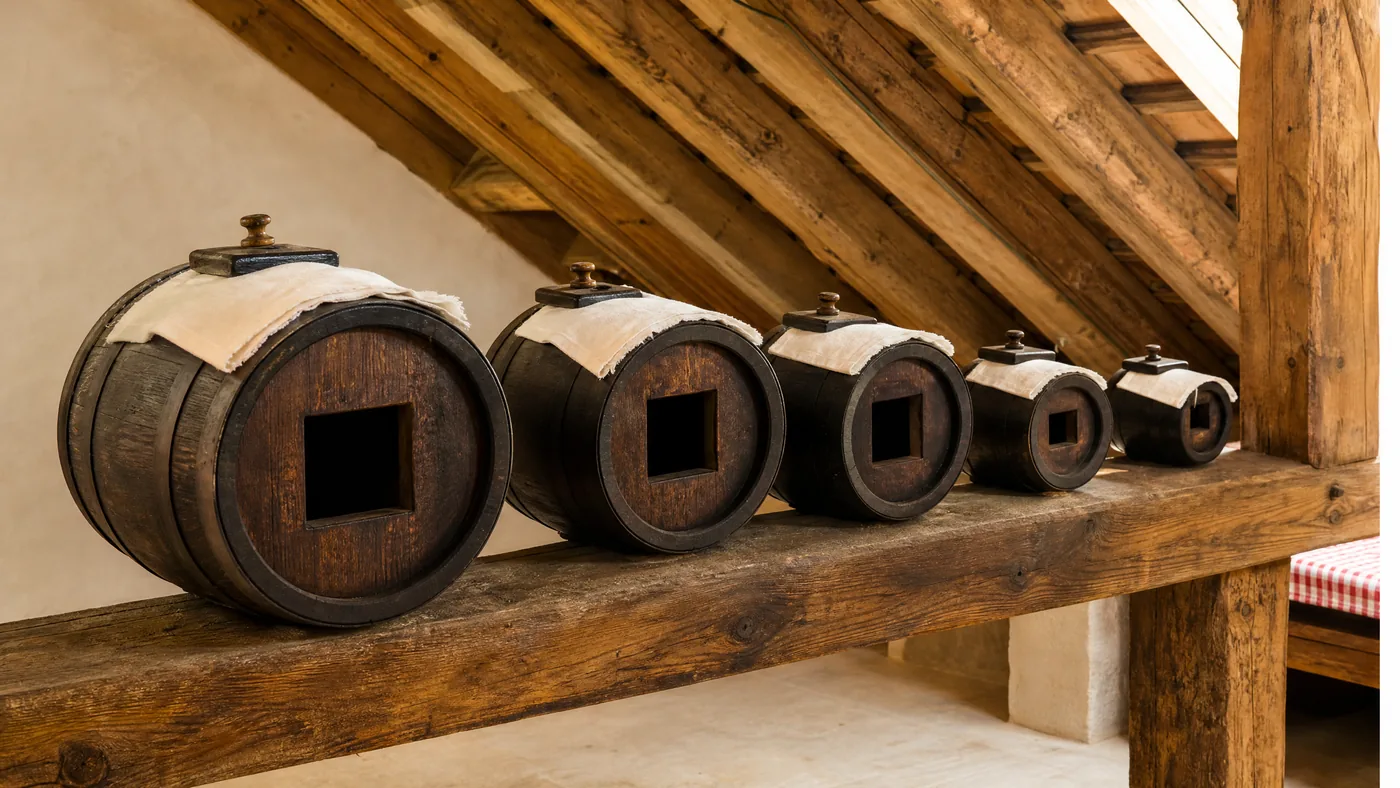
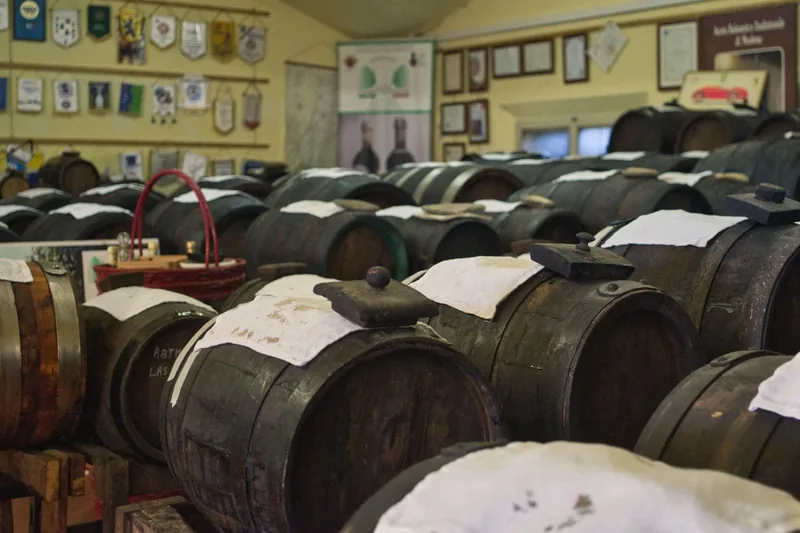
The cooked must then moves into a battery: a row of small barrels of decreasing size, made of different woods such as oak, chestnut, mulberry, juniper and cherry, each family keeping its own mix. The barrels sit in the acetaia, the vinegar loft, usually under the roof, where summer heat and winter cold do the work. Over the years the vinegar is moved from one barrel to the next, and it slowly turns dark, dense and glossy.
- Affinato means aged at least 12 years.
- Extravecchio means aged at least 25 years.
- Never 100 years old. The DOP consortium says so plainly: the vinegar is not aged for 100 or 200 years, but the barrels can be that old.
Every batch is tested before bottling. By the rules it must be dark brown, syrupy and well balanced, with an acidity of at least 4.5 grams of acetic acid per 100 grams. The name has had DOP status since 2000, and every step, from the grapes to the bottling, happens in the province of Modena.
See a battery for yourself: the barrels sit in the attic of a family villa outside Modena, and the visit ends with a teaspoon of the 12 and 25 year vinegars and a long Emilian lunch.
Check dates for the balsamic lunch with vinegar cellar tourIs there a difference between balsamic vinegar and balsamic vinegar of Modena?
Yes. Plain "balsamic vinegar" can be made anywhere. Aceto Balsamico di Modena IGP must be made in Modena or Reggio Emilia under fixed rules, and Aceto Balsamico Tradizionale di Modena DOP is a different, much older product again.
Three things share the word balsamic on a supermarket shelf:
- A bottle that just says balsamic. In December 2019 the Court of Justice of the EU ruled that the protection of "Aceto Balsamico di Modena" covers the full name, not the single words "aceto" and "balsamico". A dressing, a glaze or a vinegar called balsamic can come from anywhere.
- Aceto Balsamico di Modena IGP. Cooked or concentrated grape must (at least 20%) blended with wine vinegar (at least 10%) and a share of vinegar aged at least ten years. Caramel up to 2% is allowed for color. It ages in wood for at least 60 days and is made in the provinces of Modena and Reggio Emilia.
- Aceto Balsamico Tradizionale di Modena DOP. Cooked must only, no wine vinegar, no caramel, at least 12 years in barrels, and the grapes may only come from Modena.
The DOP consortium sums up the gap in four words: method, ageing, taste and price. Reggio Emilia, next door, has its own traditional vinegar with its own DOP, also aged at least 12 years and sold in a 100 ml bottle shaped like an upside-down tulip, says Reggio Emilia's official tourism site. Its labels come in lobster red, silver and gold; the gold one, Oro, is aged at least 25 years.
| Tradizionale di Modena DOP | Balsamico di Modena IGP | Tradizionale di Reggio Emilia DOP | |
|---|---|---|---|
| Made from | Cooked grape must only | Cooked or concentrated must plus wine vinegar | Cooked grape must |
| Minimum ageing | 12 years (Affinato), 25 years (Extravecchio) | 60 days; Invecchiato over 3 years, Riserva over 5 | 12 years; Oro at least 25 |
| Caramel | Not allowed | Up to 2% for color | Not allowed |
| Bottle | 100 ml Giugiaro bottle, round with a rectangular base | Glass, wood, ceramic or terracotta, many sizes | 100 ml upside-down tulip |
| Seal or logo | Numbered seal, DOP logo on the neck | "IGP" and the yellow and blue logo | Lobster red, silver or gold label |
| Where | Province of Modena only | Provinces of Modena and Reggio Emilia | Province of Reggio Emilia |
| How you use it | A few drops, uncooked | Every day, in dressings and cooking | A few drops, uncooked |
Modena figures are from the two Modena consortia; Reggio Emilia figures are from Reggio Emilia Welcome and VisitEmilia.
What is the best balsamic vinegar in Italy?
There is no official ranking. The top tier is traditional DOP from Modena or Reggio Emilia, and the most complex of all is an Extravecchio, aged at least 25 years.
Which Italian city is famous for balsamic? Modena first, then Reggio Emilia. Every bottle that carries either traditional DOP has passed the same kind of panel tasting, so the honest answer to "what is the best balsamic in the world" is: a traditional DOP you like, from a family whose style suits you.
Styles differ more than people expect. The wood mix of the battery, the grapes and the attic all leave a mark. The Museo del Balsamico describes its Extravecchio aged only in cherry wood as soft, with fruity notes of cherry. That is why two Extravecchio bottles can taste nothing alike.
Pick by use, as the DOP consortium suggests:
- Affinato for salads, carpaccio, aged cheese and fresh fruit. Balanced, with hints of wood and ripe fruit.
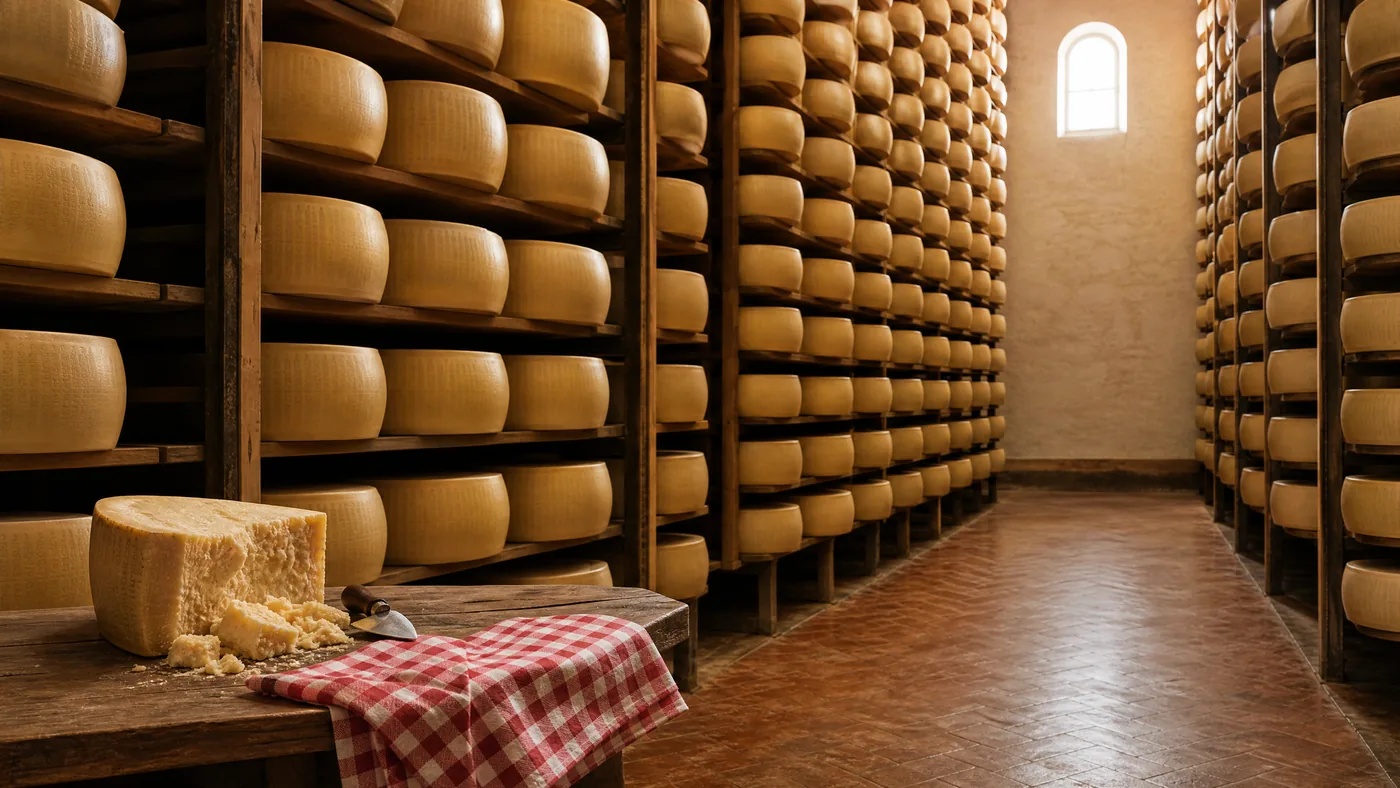
- Extravecchio for risotto, braised red meat or a chunk of extra mature Parmigiano Reggiano at the end of a meal. Darker, denser, with dried fruit and spice.
The tastiest balsamic is the one you try next to another. On the balsamic lunch at a family acetaia you taste the 12 and the 25 year side by side on a teaspoon, then with cheese, ricotta and risotto, and the difference becomes obvious in a minute.
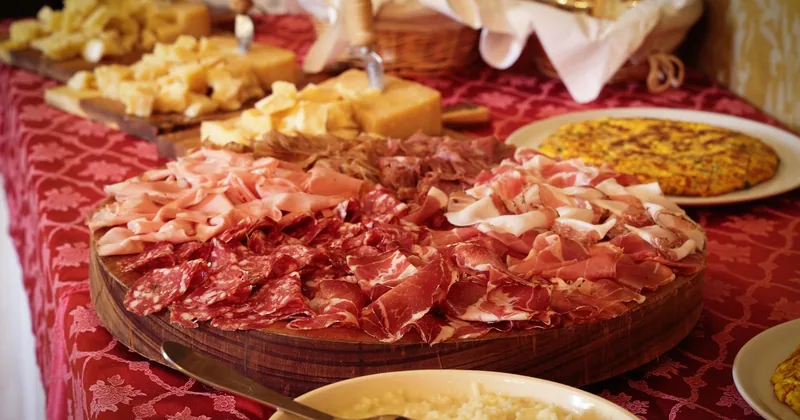
The Gambigliani Zoccoli family opens its villa near Castelfranco Emilia: the barrel loft in the attic, a DOP tasting of both ages, then lunch paired with the vinegar.
Explore the balsamic lunch with vinegar cellar tour Tour detailsHow can you tell the difference between real balsamic vinegar and fake?
Read the bottle and the label. Traditional DOP comes only in the 100 ml Giugiaro bottle with a numbered seal. IGP must show the full name "Aceto Balsamico di Modena", the letters IGP and the yellow and blue logo.
Fakes rarely copy the rules; they copy the look. Check these points.
Traditional DOP, Modena:
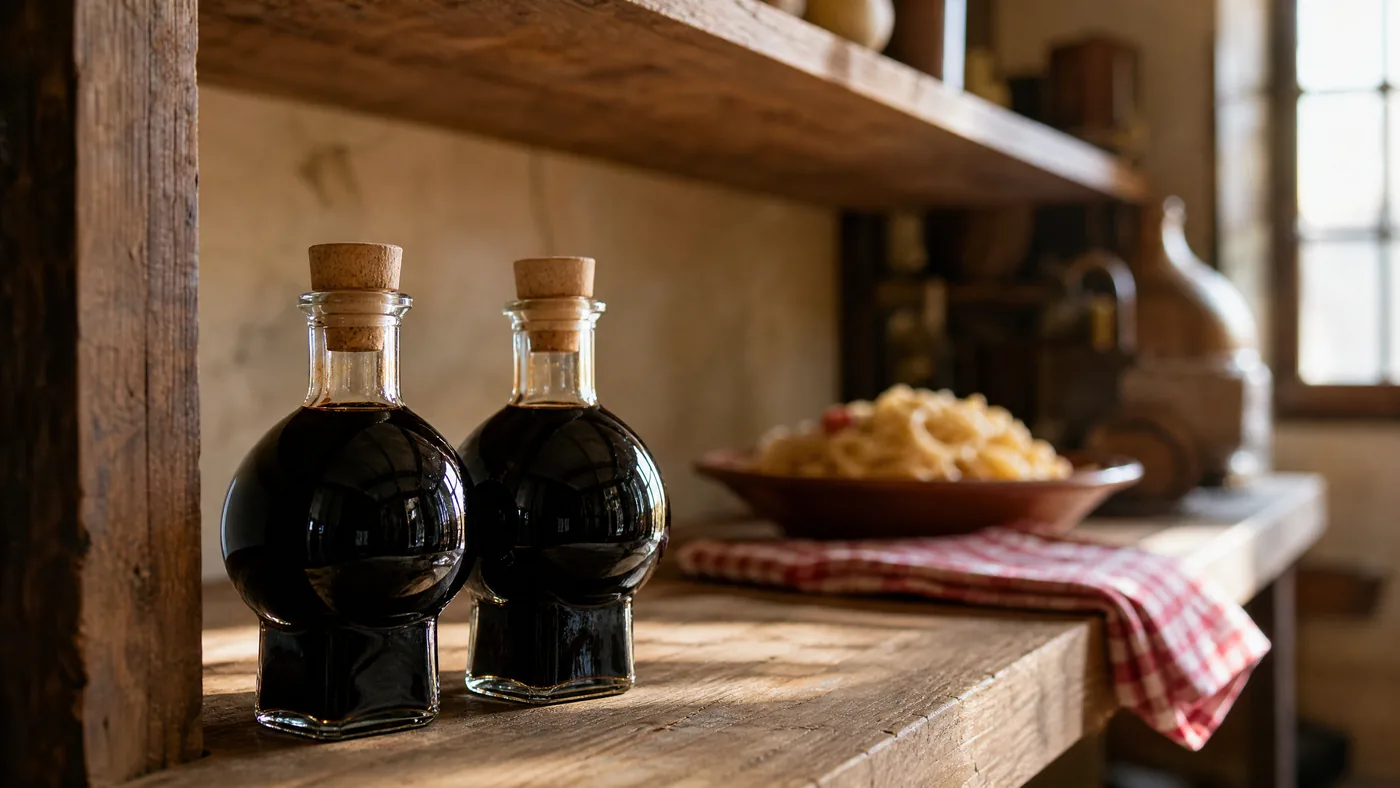
- The bottle. Designed by Giorgetto Giugiaro in 1987: a round glass body on a rectangular base, used by every producer and filled only in authorised bottling centres.
- The seal. It closes the cap, breaks when you open the bottle and carries a unique serial number. The letter A marks the 12 year vinegar, the letter E the Extravecchio.
- The words. The rules forbid "extra", "fine", "riserva", "superiore", "classico" and any year of production. A traditional balsamic labeled with an age like "30 years" or "riserva" is not the Modena DOP.
Aceto Balsamico di Modena IGP:
- The full Italian name, which may also be translated.
- "Indicazione Geografica Protetta" or IGP, and the yellow and blue PGI logo.
- No numbers or adjectives that hint at age or quality. Only "Invecchiato" (over 3 years) and "Riserva" (over 5 years) are allowed.
A bottle that says only "balsamic", "condiment" or "glaze" sits outside both rulebooks. It may still taste fine. It is just not what Modena means by the word.
How can you tell if balsamic vinegar is high quality?
Taste it the way the consortium does: a few drops at room temperature on a ceramic spoon. Look for a glossy dark brown, a dense, slow pour, a complex smell and sweetness followed by a gentle acidity.
The DOP consortium's tasting guide is short and works for any balsamic:
- Temperature and spoon. Room temperature, a small glass or a ceramic tasting spoon. Metal changes the taste.
- Look. Brilliant dark brown that catches the light, and a velvety body.
- Smell. Wood, ripe fruit and a hint of spice, never a sharp hit of vinegar.
- Taste. Sweet first, then a pleasant acidity that balances it, with plum, cherry and wood at the end, and a long finish.
For IGP, density is a quick clue that the rules spell out: at least 1.06 for the standard vinegar, 1.15 for Invecchiato and 1.25 for Riserva. A thin, very sharp IGP is the young everyday kind; a thicker one has spent longer in wood.
The traditional DOP is denser again, at least 1.240 by the rules. On a spoon it barely moves.
A 90-minute version of the same family visit: the attic barrels, the DOP teaspoon tasting of both ages and a pairing with Parmigiano, ricotta and focaccia.
Check dates for the balsamic vinegar cellar tour and tastingWhat is the most expensive balsamic vinegar?
Traditional DOP, and above all the Extravecchio. At the Museo del Balsamico shop in Spilamberto a 100 ml Affinato costs 85 euros and an Extravecchio from 110 euros. The everyday choice is a good IGP.
The price reflects the time. A bottle of Extravecchio holds vinegar that started in the barrels at least 25 years ago, and only 100 ml of it fits in the bottle. Prices on the shop of the Museo del Balsamico Tradizionale, whose own vinegar ages in the attic of Villa Fabriani, as read on 19 November 2026:
| Bottle (100 ml) | Minimum age | Museo del Balsamico shop price |
|---|---|---|
| Traditional DOP Affinato | 12 years | 85 euros |
| Traditional DOP Extravecchio | 25 years | 110 euros |
| Traditional DOP Extravecchio, cherry or juniper barrels only | 25 years | 170 euros |
The best inexpensive balsamic is an Aceto Balsamico di Modena IGP with the full name and the logo on the label. Use the young one for dressings and cooking, and an Invecchiato or Riserva where you want more body for less money than a DOP. For shop prices across producers, see our post on balsamic vinegar prices.
What balsamic vinegar do Italians use?
Both. IGP goes into everyday cooking, and families in Modena keep traditional balsamic for a few drops on cheese, meat, fruit or dessert. In Italian it is aceto balsamico, or just balsamico.
What do Italians call balsamic vinegar? Aceto balsamico, where aceto means vinegar; locals say balsamico for short, and the traditional kind is often called the "black gold" of Modena. In Modena it is also family history. The DOP consortium tells of a battery of barrels started when a daughter was born, to become part of her dowry.
How the two get used:
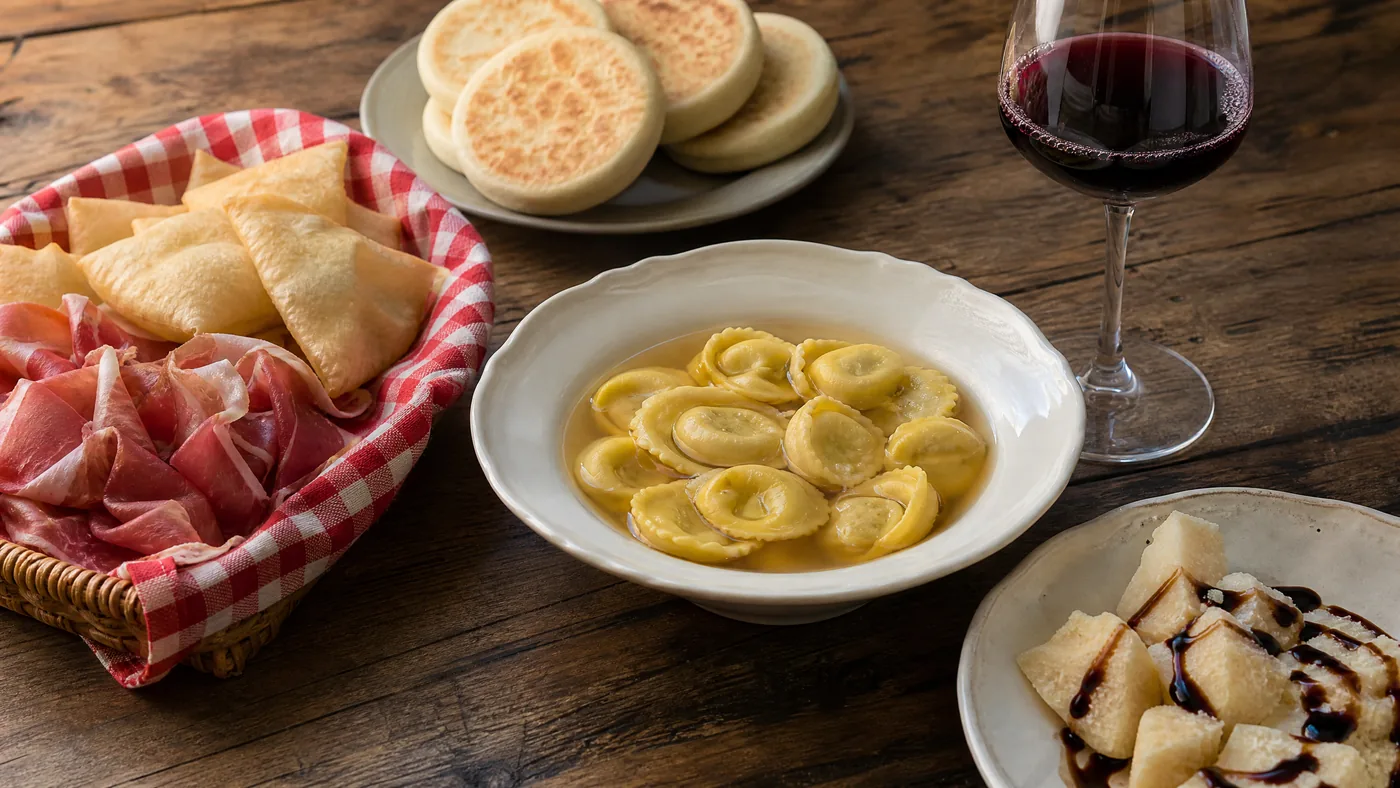
- IGP, every day. The IGP consortium pairs it with tigelle and Parmigiano Reggiano, tortelloni with butter and sage, cotechino with lentils, strawberries, tomato salads and roast vegetables.
- Traditional DOP, by the drop. A few drops on aged Parmigiano, a grilled beef fillet, strawberries or panna cotta. The Museo del Balsamico adds a simple rule: never cook it, because heat destroys its most delicate aromas. Add it at the end.
The IGP is also one of Italy's biggest food exports. Its consortium counts 95 to 100 million liters a year, more than 90% of it sent to over 130 countries. For the dishes to try it on in town, see what to eat in Modena.
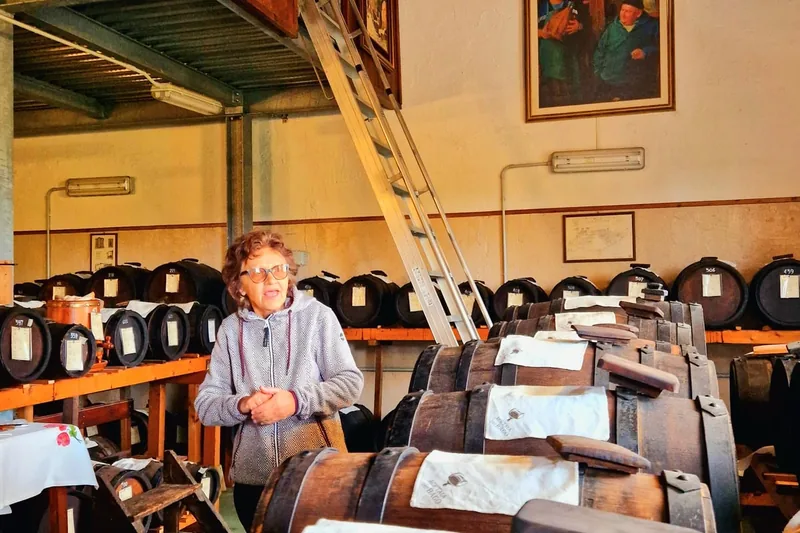
Marianna, the producer, walks you through a historic cellar among vineyards and cherry trees in Vignola, then pours organic and DOP balsamic over Parmigiano Reggiano.
Explore the organic traditional balsamic tour in Vignola Tour detailsCan you eat 10 year old balsamic vinegar?
The consortia say a well-kept bottle lasts for years. Traditional DOP keeps its qualities and can improve; IGP does not deteriorate in storage. Keep both closed, cool and dark, and out of the fridge.
Storage advice from the two consortia:
- Traditional DOP. A cool, dry place away from heat and direct light. No need for the fridge once open. Stored this way, says the DOP consortium, it keeps its qualities for years and improves with age.
- IGP. Tightly closed, cool and dry, away from sunlight, heat and strong smells. The IGP consortium says not to refrigerate it, as the cold can change its structure, and that a light sediment at the bottom is natural.
A ten year old bottle from the back of the cupboard is usually fine by these rules. If it smells or looks wrong, do not use it.
Taking bottles home? A 100 ml DOP fits the cabin liquids rule. Our guide to bringing balsamic vinegar home covers packing and customs.
Frequently asked questions
Is traditional balsamic vinegar ever 100 years old?
No. Traditional balsamic of Modena is aged at least 12 years (Affinato) or at least 25 years (Extravecchio). The barrels can be 100 or 200 years old, says the DOP consortium, but the vinegar is not.
Is Reggio Emilia balsamic the same as Modena balsamic?
No. Reggio Emilia has its own traditional balsamic DOP, aged at least 12 years and sold in a 100 ml bottle shaped like an upside-down tulip, with lobster red, silver or gold labels. The Modena DOP uses the round Giugiaro bottle.
Where can you buy authentic balsamic vinegar?
The DOP consortium names three places: directly at the acetaie, in specialist food shops, and from authorised online sellers. Check for the numbered seal on traditional DOP and the IGP logo on everyday balsamic.
Do you cook with traditional balsamic vinegar?
No. Use it raw, a few drops at the end, on cheese, meat, risotto, fruit or ice cream. Cook with the IGP.
Ready to book
Choose your tour
Free cancellation up to 24 hours before on every option. Prices are from-prices in USD and move with the season.
Balsamic Lunch with Vinegar Cellar Tour
- Guided tour of the vinegar cellar
- Traditional Balsamic Vinegar of Modena DOP tasting (12+ and 25+ years)
- Lunch paired with the vinegar
Balsamic Vinegar Cellar Tour, Tasting & Food Pairing
- Guided tour of the production and the barrels
- DOP tasting on a teaspoon (12+ and 25+ years)
- Food pairing with local delicacies
Organic Traditional Balsamic Tour in Vignola
Organic and DOP balsamic with Parmigiano, among the cherry orchards