Booking choice: The balsamic vinegar cellar tour and tasting, from $16 per person. Check dates Tour details
Balsamic vinegar is a grape-based condiment, and the customs agencies of the United States, Canada and the United Kingdom do not treat it like meat or cheese. The 100 ml traditional balsamic bottle even fits the airport liquids rule for cabin bags.
This guide covers the cabin and checked bag rules, packing, shipping from the acetaia, what each country lets you bring back from Italy, what you declare when you leave, and how to store the bottle once you are home. Customs rules change, so we name the official agency for each one.
The quick answer
Yes, you can bring balsamic vinegar home from Italy. In the cabin, each container must be 100 ml or less and fit in one clear resealable bag of up to one liter, so the 100 ml DOP bottle fits. Larger bottles go in the checked bag, well padded. Declare all food on arrival. Vinegar is allowed in the US and Canada, but cured ham is restricted, and Great Britain bans meat and dairy brought from the EU.
Can I bring balsamic vinegar back from Italy?
Yes. The US Department of Agriculture lists vinegar among condiments travelers can generally bring in, and Canada sets no restrictions on condiments within 20 liters.
Vinegar is one of the simplest foods to carry home. Here is what the agencies say:
- United States. The US Department of Agriculture lists condiments such as oil, vinegar, mustard, honey, jelly and jam as generally allowed, but says they should still be declared and shown to a U.S. Customs and Border Protection (CBP) officer.
- Canada. The Canadian Food Inspection Agency (CFIA) lists no restrictions on condiments and dressings from any country, up to 20 kg or 20 liters per person. You must declare all food you bring in.
- United Kingdom. GOV.UK's restrictions on food from EU countries cover meat and dairy. Vinegar is not in the restricted categories it lists.
- Australia. The Australian Border Force says food must be declared on your Incoming Passenger Card, even small amounts, and points to the Department of Agriculture, Fisheries and Forestry's BICON system for the conditions on each product.
Rules can change, so check the agency's own page in the week you fly.
Can I take balsamic vinegar in my hand luggage?
Only in containers of 100 ml or less, inside one clear resealable bag of up to one liter. The 100 ml DOP bottle fits; bigger bottles go in the checked bag.
ENAC, Italy's civil aviation authority, sets out the EU rule: liquids, aerosols and gels in cabin bags must be in containers of up to 100 ml, inside a transparent, resealable plastic bag of up to one liter, fully closed. Balsamic counts as a liquid.
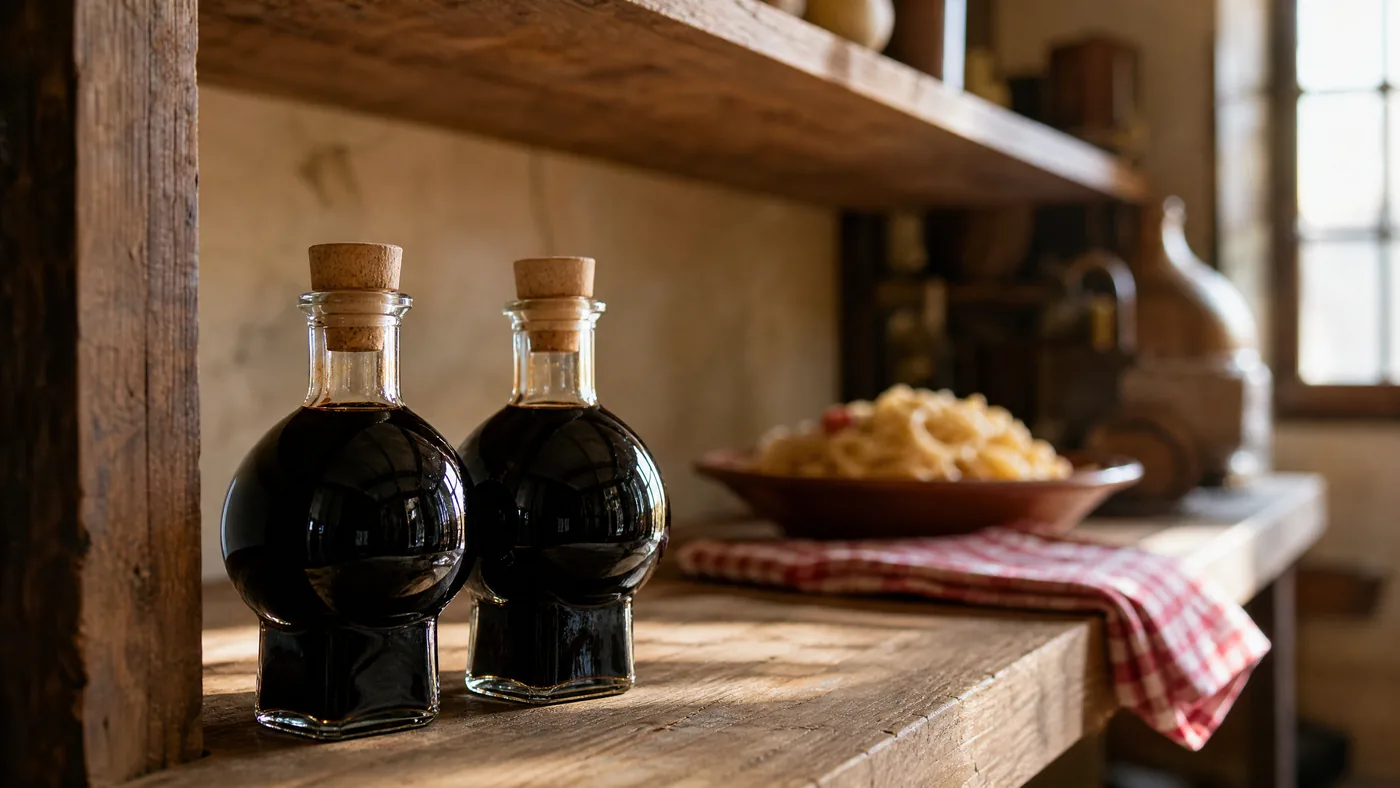
Here the traditional vinegar has a lucky advantage. Aceto Balsamico Tradizionale di Modena DOP is only sold in the 100 ml bottle designed by Giorgetto Giugiaro, so one bottle fits the rule. It shares the liter bag with your toiletries, though, so one or two is the realistic limit. The IGP comes in sizes from 100 ml up to 5 liters, so check the label: anything over 100 ml goes in the hold.
Some Italian airports have new scanners that accept larger containers, and ENAC reported five such airports in 2025. That depends on the airport and even the terminal, so plan for 100 ml and treat anything more as a bonus. Flying home through the United States? You clear security again for the connecting flight under the TSA's own 3.4 ounce (100 ml) rule, so pack larger bottles in the checked bag before you leave Italy.
How do I pack balsamic vinegar in a suitcase?
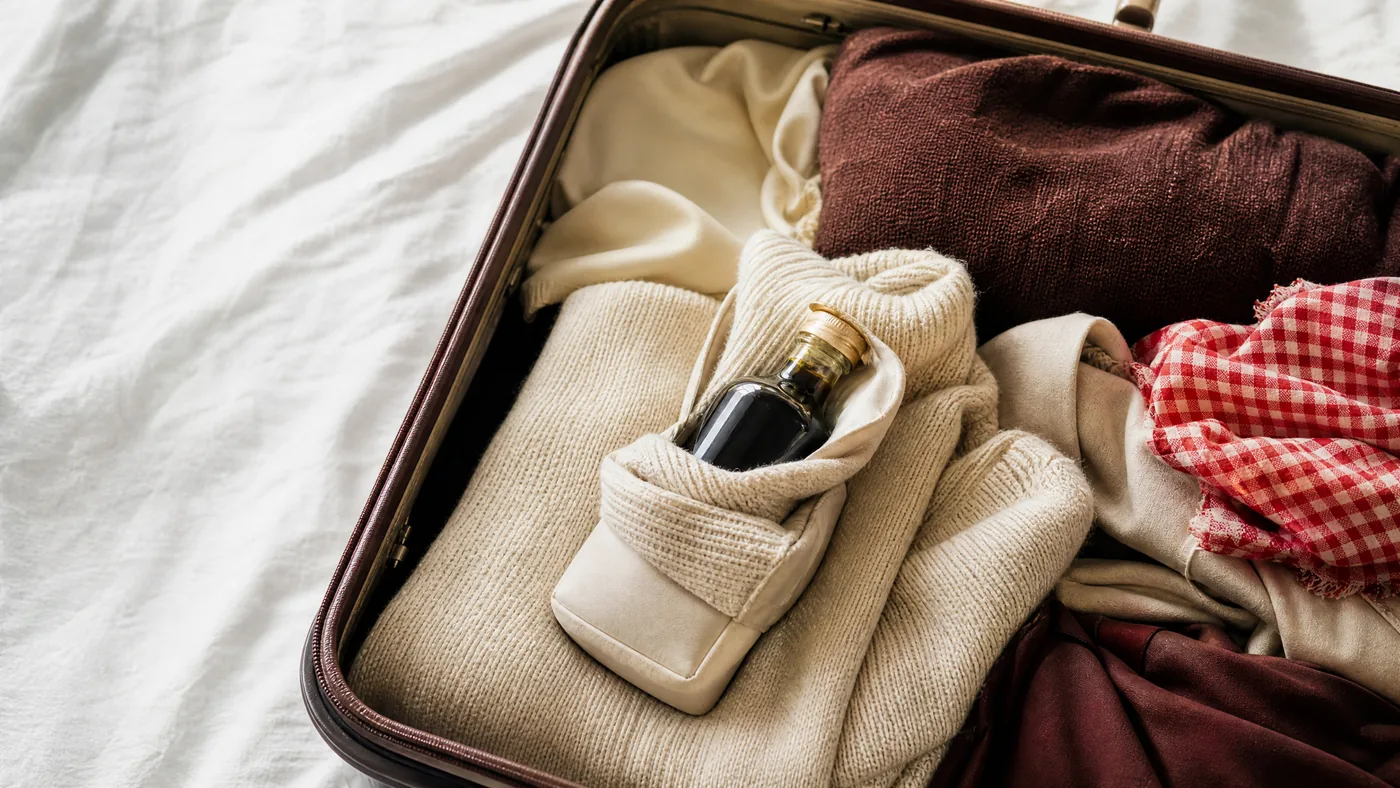
Seal the cap, bag the bottle, wrap it in soft clothing or a padded bottle sleeve, and put it in the middle of the suitcase.
Checked bags have no 100 ml limit for vinegar, so the job is to stop the glass breaking and the bottle leaking. A routine that works:
- Seal the cap. Tape over a screw cap or cork. DOP bottles come sealed with a numbered seal, which helps.
- Bag it. Put each bottle in a zip-top bag, so a leak stays in the bag and not on your clothes.
- Pad it. Use a padded bottle sleeve, or roll the bottle inside a sweater or a pair of jeans.
- Center it. Pack it in the middle of the case with clothes on every side, away from the wheels and the corners.
- Keep the box. If the acetaia gives you a gift box, keep it. It adds a layer and protects the label.
Balsamic is dense and stains, so the bag matters more than you think. A hard-shell suitcase is safer than a soft one.
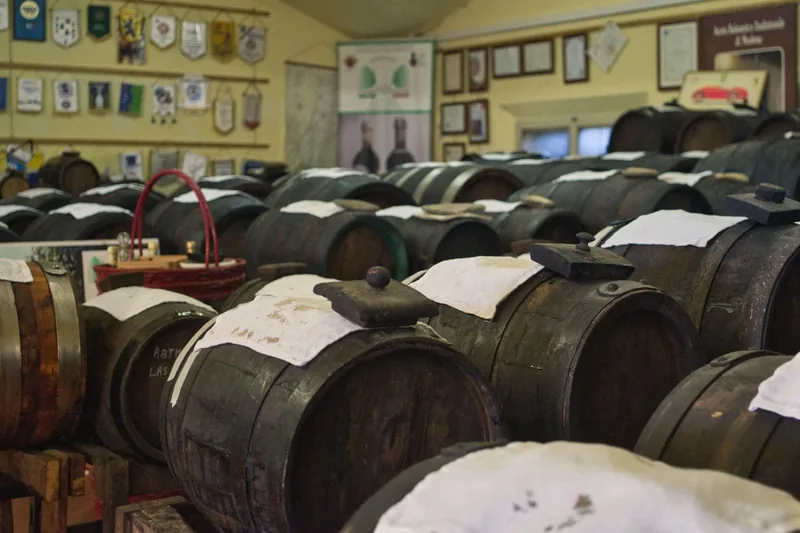
Taste before you buy: the family acetaia's DOP aged 12 and 25 years on a teaspoon, with local food, in 90 minutes.
Explore the balsamic vinegar cellar tour and tasting Tour detailsCan I ship balsamic vinegar home from the acetaia?
Often, yes. The family acetaia on the cellar tour offers to ship your purchase to your home address.
Shipping saves suitcase space and worry. The Gambigliani Zoccoli family's listing for the balsamic vinegar cellar tour and tasting says you can buy their vinegar at the villa or have it shipped to your home address. Guests at Antica Acetaia Cavedoni also write in their reviews that they had bottles shipped home. Ask at the end of the tasting; each acetaia sets its own prices and countries.
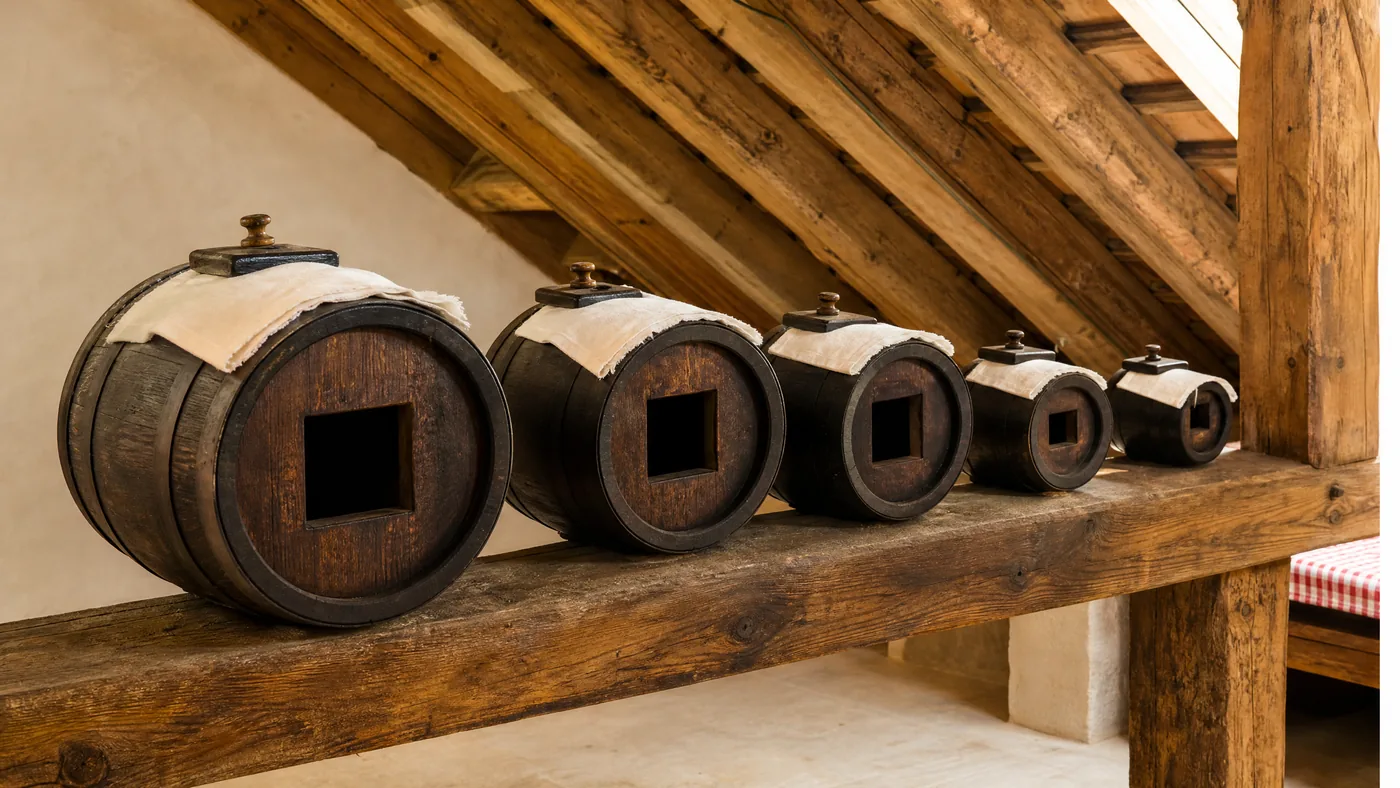
The cellar tour is on the family's farm at Via Mavora 154, Castelfranco Emilia. You meet Mario and Giorgio Gambigliani Zoccoli, visit the acetaia in the attic of the villa, and taste the DOP aged at least 12 and at least 25 years on a teaspoon, then local food such as ricotta, Parmigiano Reggiano, focaccia and omelettes. It takes 1.5 hours, from $16 per person, with 5.0 stars from 225 reviews on GetYourGuide. There is no hotel pickup, but the free shuttle from Modena station runs on request at least 24 hours ahead.
Buying in town works too. A guest on the Modena food walk wrote:
★★★★★Walking around Modena with our guide was amazing, she was very informative and knowledgeable about the history of the city and the local foods. We tasted the balsamic vinegar and bought 3 bottles, we tasted local sweet treats and has 2 types of wine and food.
Buy at the barrels: the cellar tour's family sells at the villa and can ship bottles to your home address.
Check dates for the balsamic vinegar cellar tour and tastingWhat are you not allowed to bring back from Italy?
It depends on where you live. Cured hams such as prosciutto are the most common problem, and Great Britain bans meat and dairy from the EU.
Balsamic is easy. The ham and cheese you may want to bring with it are not. This is what each agency says, read on 19 November 2026:
| Going home to | Balsamic vinegar | Hard cheese such as Parmigiano | Cured ham and salami | Agency |
|---|---|---|---|---|
| United States | Generally allowed; declare it | Hard cured cheese without meat, such as parmesan, generally allowed | Prosciutto and salami from areas within Italy may not be brought by travelers | USDA, APHIS and CBP |
| Great Britain | Not in the restricted list | Not allowed from EU countries | Not allowed from EU countries | GOV.UK (Defra) |
| Canada | No restrictions up to 20 liters | Pasteurized cheese allowed; unpasteurized only from countries free of certain animal diseases | Fresh, dried and cured meats such as hams and sausages not permitted | CFIA |
| Australia | Declare it | Declare it; conditions in BICON | Declare it; conditions in BICON | Australian Border Force and DAFF |
- United States. APHIS says cured hams such as prosciutto, and salami, from areas within Italy, France, Germany and Spain may only enter in commercial shipments, not with travelers. Its separate African swine fever page asks travelers not to bring pork foods from affected countries at all.
- Great Britain. Since 12 April 2025 travelers from the EU cannot bring in meat from cattle, sheep, goats and pigs, or dairy products such as cheese, for personal use. That applies whether the food is packed or bought duty free. GOV.UK says banned items are seized, and fines in England can reach 5,000 pounds.
- Canada. Parmigiano Reggiano is made from unpasteurized milk, so check the CFIA's Automated Import Reference System before you pack a wedge.
The safest souvenirs from Modena are the ones in a bottle. Lambrusco follows each country's alcohol allowance, which is a separate rule.
What do you have to declare leaving Italy?
Cash of 10,000 euros or more. Visitors from outside the EU who want a VAT refund also have purchases validated at customs before they fly.
Leaving Italy is simpler than arriving home. The Italian Customs and Monopolies Agency (ADM) reminds travelers to declare cash of 10,000 euros or more when they cross the EU border.
Tax-free shopping is the other exit step. If you live outside the EU and spend more than 70 euros in one shop (the threshold is 70.01 euros), the shop can issue a tax-free invoice. The customs agency validates it through its digital OTELLO system at your last EU airport, and since 1 July 2026 several invoices can be validated together against your passport. Ask the acetaia shop whether it uses a tax-free service before you pay.
Then the arrival side. Americans returning home have an 800 dollar duty-free personal exemption every 31 days, according to CBP, which can include one liter of alcohol if you are 21 or older. Bottles of balsamic count toward the value like any other purchase, and you still declare them as food.
Shop at the villa after the tasting: the cellar tour's family sells its DOP bottles on site.
Check dates for the balsamic vinegar cellar tour and tastingDo I need to refrigerate balsamic vinegar after opening?
No. Both consortia say to keep it in a cool, dry place away from heat and light, and the IGP consortium says not to refrigerate it.
This is the question the hosts hear at the end of every tasting. The answers come from the two consortia:
- Aceto Balsamico Tradizionale di Modena DOP. Store it in a cool, dry place, away from heat and direct light. There is no need to keep it in the fridge once open. Kept that way, it holds its qualities for years.
- Aceto Balsamico di Modena IGP. Keep the bottle tightly closed in a cool, dry place, away from sunlight, heat and strong smells. Do not refrigerate it: cold can change its character and texture. Use it at room temperature. A slight sediment at the bottom over time is natural.
At home, that means a kitchen cupboard away from the stove.
Which balsamic should you buy to take home?
A 100 ml DOP bottle for the cabin and for special dishes, and an IGP for everyday cooking. Check the seal, the full name and the logo.
Read the label before you pay, wherever you buy:
- DOP. The Giugiaro bottle (round, on a rectangular base), the numbered seal and the DOP logo on the neck. Affinato is aged at least 12 years, Extravecchio at least 25. No DOP is 100 years old, though the barrels can be.
- IGP. The full name "Aceto Balsamico di Modena", the letters IGP and the yellow and blue logo. "Invecchiato" means aged more than 3 years, "Riserva" more than 5.
The DOP consortium lists three places to buy: directly from the producers, in specialist food shops, and online, as long as the product is certified with the government seal. Buying at the acetaia has one extra benefit: you taste first. The differences between bottles, and what they cost, are in our traditional balsamic guide and our post on balsamic prices. Bottles as presents are in our Christmas gifts post.
No car? The city center balsamic barrel room on Rua del Muro is the one tasting inside central Modena, with six or more balsamics in 45 minutes.
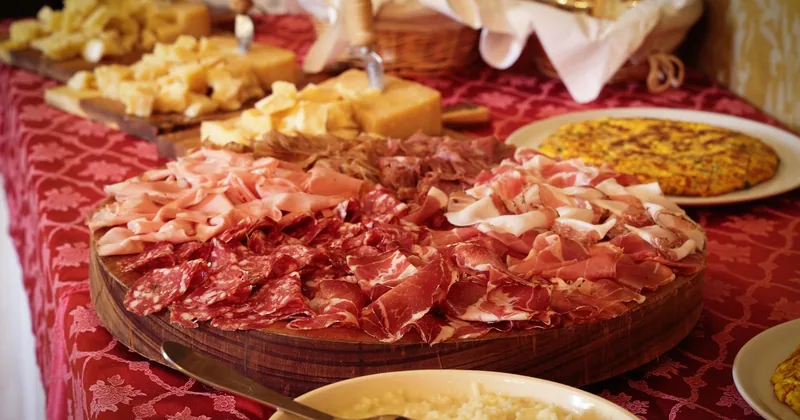
Taste the DOP aged 12 and 25 years at a family acetaia, have lunch paired with it, then buy the bottle you liked best.
Explore the balsamic lunch with vinegar cellar tour Tour detailsFrequently asked questions
Can I bring balsamic vinegar back from Italy?
Yes. The US Department of Agriculture lists vinegar among condiments that are generally allowed, and Canada sets no restrictions on condiments up to 20 liters. Declare all food when you arrive. Australia also asks you to declare food on the Incoming Passenger Card.
Can I take balsamic vinegar in my carry-on?
Only in containers of 100 ml or less, inside one clear resealable bag of up to one liter. The 100 ml traditional balsamic bottle fits. Put larger bottles in your checked bag.
What do you have to declare leaving Italy?
Cash of 10,000 euros or more, according to the Italian Customs and Monopolies Agency. Non-EU visitors claiming a VAT refund have their tax-free invoices validated at customs before they fly.
Should you refrigerate balsamic vinegar after it is opened?
No. The DOP consortium says there is no need, and the IGP consortium says not to, because cold can alter it. Keep the bottle closed in a cool, dry, dark cupboard.
Ready to book
Choose your tour
Free cancellation up to 24 hours before on every option. Prices are from-prices in USD and move with the season.
Balsamic Vinegar Cellar Tour, Tasting & Food Pairing
- Guided tour of the production and the barrels
- DOP tasting on a teaspoon (12+ and 25+ years)
- Food pairing with local delicacies
Balsamic Lunch with Vinegar Cellar Tour
- Guided tour of the vinegar cellar
- Traditional Balsamic Vinegar of Modena DOP tasting (12+ and 25+ years)
- Lunch paired with the vinegar
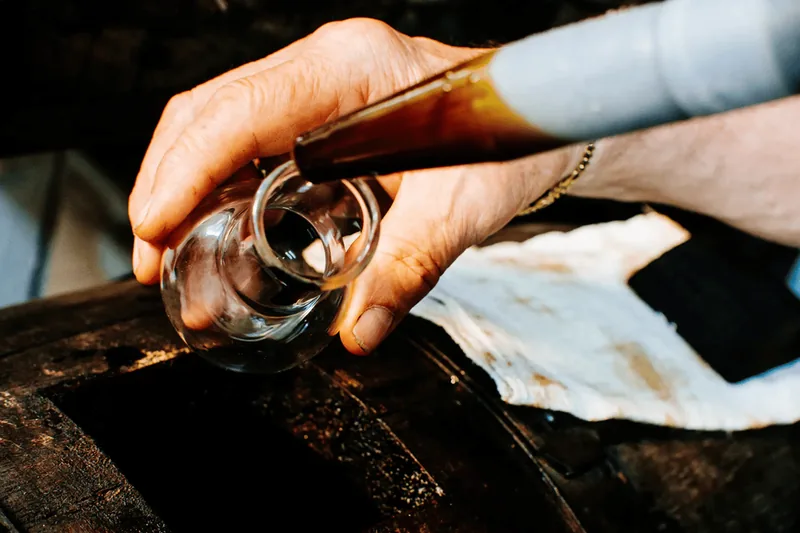
Modena City Centre Balsamic Barrel Room
Six or more balsamic tastings without leaving the old town